
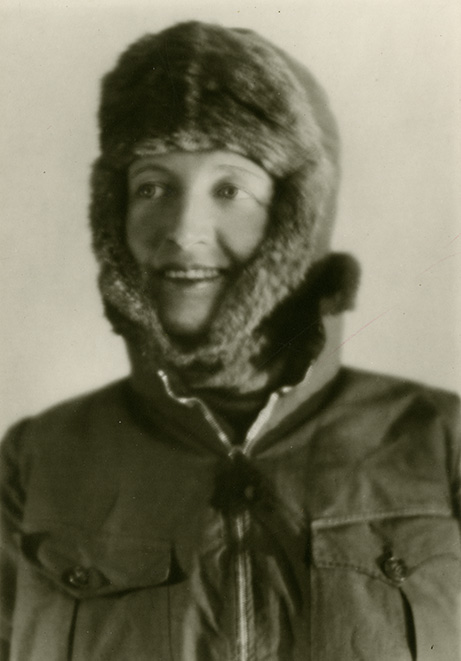

In her youth, Louise and her family split time between their home in San Rafael (now the Elks Club) and their ranch on the slopes of Mt. Diablo in Contra Costa County. She developed an early love of the great outdoors, chasing after her two older brothers, Seth and John.
At the age of 22, after the untimely deaths of her brothers, Louise took over the management of the family’s investment firm and traveled with her parents in the United States and Europe. She learned the art of photography, a skill that was invaluable in her later expeditions.
True to her intrepid nature, Louise took a train to Buffalo, N.Y. in 1919, purchased a touring car, and drove across the United States at a time when there was no highway system and most roads were gravel and dirt. This would be the first of many coast-to-coast trips she would take and could be one of the first cross-country automobile trips completed by a woman.
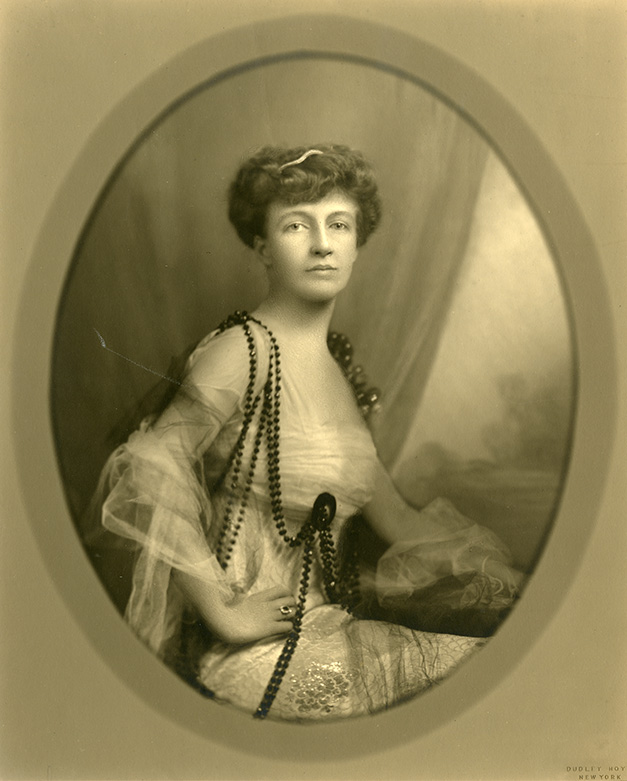
Upon her parent’s death in 1920, Louise set out on a tour of World War I battlefields, photographing and filling her diary with descriptions of the bombed-out cities, cathedrals and landscapes. Always enamored of Arctic regions, Louise would plan, finance and led seven expeditions to Greenland and the Arctic, publishing two books of scientific and geographic importance.
In 1934, Louise represented the United States as a delegate to the International Geographical Congress in Warsaw, Poland. In typical Louise Boyd fashion, she shipped the family limousine overseas and set out on a 3-month photography and cultural information gathering expedition that led to her publishing a third book, Polish Countrysides. Louise also worked for the U.S. government during World War II financing and leading a secret expedition along the coast of Greenland to obtain data on radio-wave trans-mission for shore-to-submarine communication.
In later years, Louise continued to travel, photographing and journaling as she visited many European and Asian countries. She also established herself as a leading Bay Area philanthropist supporting such organizations as the San Francisco Symphony, California Academy of Sciences and what is now known as WildCare.
Her final achievement and lifelong goal came in 1955 when she became the first woman to fly over the North Pole by chartering her own plane and crew. She died in San Francisco in 1972.
This article appeared in the Marin History Museum Bulletin; Summer 2020