
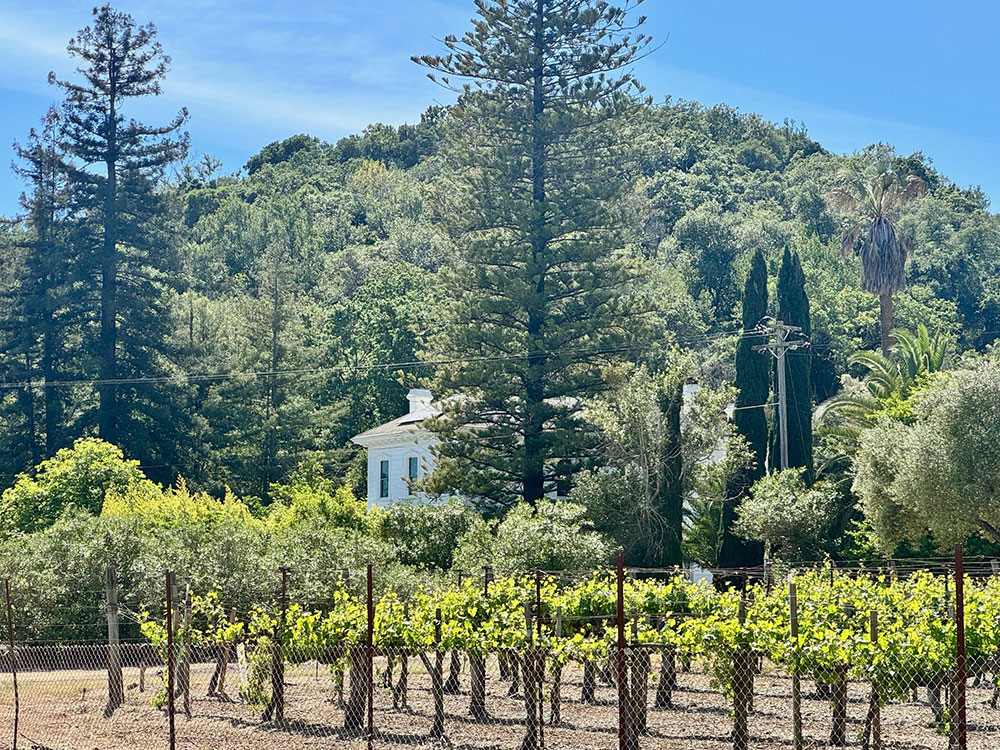

Drivers on Highway 101 pass it thousands of times a day: a hillside of grapevines and, just north of Alameda del Prado in Novato, a white Victorian peeking out above the trees.
But through the gates, beneath massive oaks, the hum of the freeway fades, replaced by the glow of Early California.
The Pacheco Ranch Winery sits on land granted to the Pacheco family by the Mexican government in 1840—the last California rancho still worked by the ancestors of the original grantee, Ignacio Pacheco. And its current don, Herb Rowland Jr., has a couple centuries’ worth of tales to tell.
But through the gates, beneath massive oaks, the hum of the freeway fades, replaced by the glow of Early California.
The Pacheco Ranch Winery sits on land granted to the Pacheco family by the Mexican government in 1840—the last California rancho still worked by the ancestors of the original grantee, Ignacio Pacheco. And its current don, Herb Rowland Jr., has a couple centuries’ worth of tales to tell.
Rowland is the great-great-grandson of Ignacio Pacheco, namesake of the Ignacio community in Novato and many local landmarks in the Bay Area, including Pacheco Valley Preserve in San Rafael and Pacheco Streets in both San Rafael and San Francisco.
Keeping a piece of land in the same family for multiple generations is no easy feat in the real estate-crazy Golden State. Rancho San Jose in southern Novato is the exception.
“My great-great grandmother Maria Pacheco left everything to her children with instructions to ‘share and share alike,’” explains Rowland, a trial attorney who is an eighth-generation Californio and fifth-generation Novato resident.
Over the decades, much of the rancho was divided, sold or taken by the government, but 70 acres remain a working vineyard today.
“Strong women in the family held the land together across generations,” Rowland says.
“My great-great grandmother Maria Pacheco left everything to her children with instructions to ‘share and share alike,’” explains Rowland, a trial attorney who is an eighth-generation Californio and fifth-generation Novato resident.
Over the decades, much of the rancho was divided, sold or taken by the government, but 70 acres remain a working vineyard today.
“Strong women in the family held the land together across generations,” Rowland says.
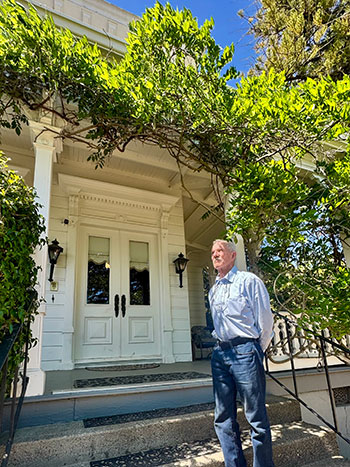
Herb Rowland on the porch of the
1882 Pacheco Ranch home
Photo by author
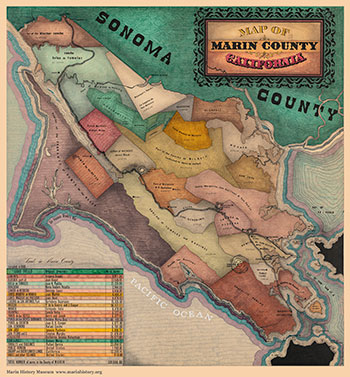
Ranchos of Marin County, ca. 1860
(MHM Collection)
Marin’s Second Adobe
California’s “Rancho Roots,” the subject of a new Marin History Museum exhibit, are less well-known than its earlier mission era. When Mexico gained its independence from Spain, the government awarded land grants to key individuals during the 1830s and 1840s.
And while the remains of the Catholic missions set up by the Spanish were salvaged as parish churches or reconstructed for tourism a century ago, the ranchos in the state’s most arable and desirable areas largely disappeared as they were developed or sliced up over the ensuing decades.
California’s “Rancho Roots,” the subject of a new Marin History Museum exhibit, are less well-known than its earlier mission era. When Mexico gained its independence from Spain, the government awarded land grants to key individuals during the 1830s and 1840s.
And while the remains of the Catholic missions set up by the Spanish were salvaged as parish churches or reconstructed for tourism a century ago, the ranchos in the state’s most arable and desirable areas largely disappeared as they were developed or sliced up over the ensuing decades.
Ignacio Pacheco was born in 1808 to the first alcalde, or mayor, of San Jose. His grandfather’s family had joined Juan Bautista de Anza’s expedition in 1776, traveling 2,000 miles north from Mexico to escape a time of disease, flood and drought. During his military service at the Presidio of San Francisco, Pacheco had occasion to explore Marin.
“He loved Marin County and you can imagine why: grass belly-high, deer everywhere and gushing streams,” says Rowland. “It was heaven.”
“He loved Marin County and you can imagine why: grass belly-high, deer everywhere and gushing streams,” says Rowland. “It was heaven.”
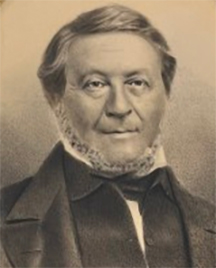
Ignacio Pacheco
(MHM Collection)
Pacheco christened his new land “Rancho San Jose” in honor of his birthplace. He built the second adobe in Marin County approximately where Boca Pizzeria now stands in Pacheco Village off Ignacio Blvd. It was 1840, and the non-native population of Marin was only about 350—in fact, all of California only had about 15,000 settlers, a figure that would skyrocket to 500,000 shortly after the Gold Rush.
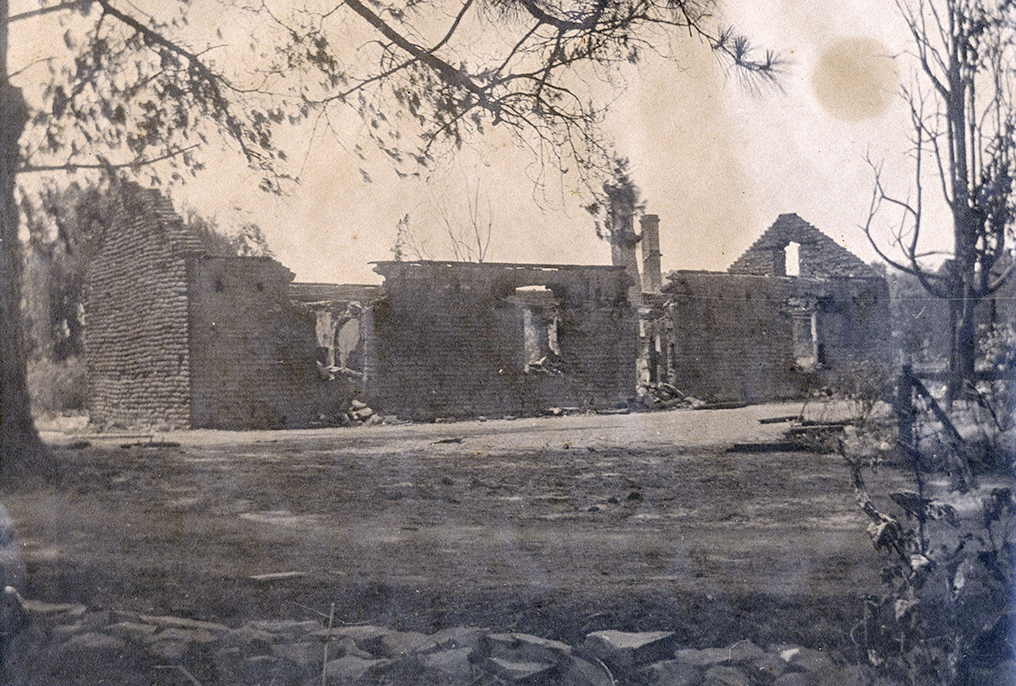
Ruins of the Ignacio Pacheco adobe after a 1916 fire (MHM Collection)
Pacheco began ranching and became famous for his horses, some of which played a formative role for the family—and perhaps for the state. The U.S. had Alta California in its sights and sent Captain John C. Frémont to wrest the state from its Mexican rulers in 1846. Guided by Kit Carson, he mobbed his way around Northern California, ostensibly surveying the land and often commandeering livestock for his party.
Pacheco heard Frémont was coming and moved his prize herds north. When Frémont arrived at the adobe demanding horses, Pacheco pointed to the old nags left in the corral. Frémont knew he had been tricked and called Pacheco a liar. Pacheco then challenged him to a duel, according to a family legend recalled by Rowland: “Pistols or swords?”
Carson warned Frémont that Pacheco was not only the best shot but the best swordsman in the state, causing Frémont to back down and move along. Had he been harmed in the fight, Frémont would have been unable to support the Bear Flag Revolt just weeks later, spelling a much messier transition to U.S. statehood for California.
Pacheco heard Frémont was coming and moved his prize herds north. When Frémont arrived at the adobe demanding horses, Pacheco pointed to the old nags left in the corral. Frémont knew he had been tricked and called Pacheco a liar. Pacheco then challenged him to a duel, according to a family legend recalled by Rowland: “Pistols or swords?”
Carson warned Frémont that Pacheco was not only the best shot but the best swordsman in the state, causing Frémont to back down and move along. Had he been harmed in the fight, Frémont would have been unable to support the Bear Flag Revolt just weeks later, spelling a much messier transition to U.S. statehood for California.
The Next Generations
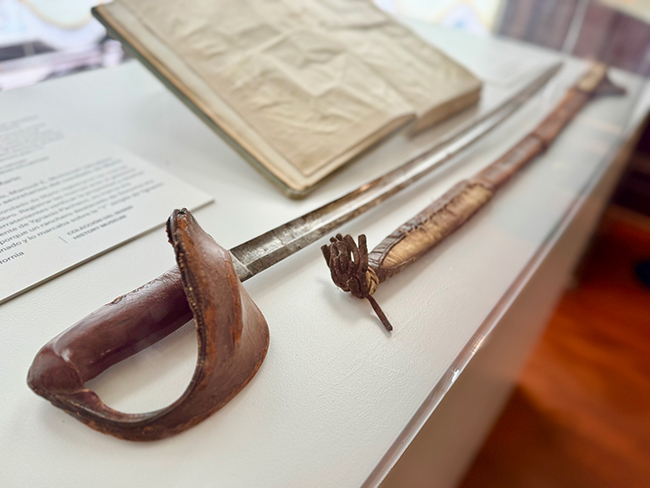
Photo by author
A look at Pacheco’s sword on display at the Marin History Museum signifies how his strength and status as the first alcalde of San Rafael helped him retain his rancho during the transition to U.S. statehood. While many Californios did not succeed in proving ownership of their land and lost it to American settlers, Rancho San Jose remained in the family, passing to his youngest son, Gumesindo Pacheco.
In 1876, Gumesindo and his wife Rosa built the two-story Italianate mansion for $3,500 a bit south of his father’s adobe. They surrounded it with an orchard, which still produces lemons, oranges, grapefruit, persimmons and breadfruit for Herb’s family today. The lemon tree in particular is of such old stock that University of California agricultural researchers cannot identify its origin.
“We had the first house in Marin County with indoor plumbing,” says Rowland, who moved into the home with his parents in the 1960s. After finding some of the original furnishings in the attic, his family restored the home to its Victorian-era origins, including a period parlor with historic portraits, lamps and collectibles.
“Ignacio picked ‘Ignacio’ because it had really good water,” explains Rowland, who still relies on natural spring water. “My parents brought out a witcher to redo my great-grandfather’s well in the 1960s but it’s now ten feet away from where he originally had it.”
“We had the first house in Marin County with indoor plumbing,” says Rowland, who moved into the home with his parents in the 1960s. After finding some of the original furnishings in the attic, his family restored the home to its Victorian-era origins, including a period parlor with historic portraits, lamps and collectibles.
“Ignacio picked ‘Ignacio’ because it had really good water,” explains Rowland, who still relies on natural spring water. “My parents brought out a witcher to redo my great-grandfather’s well in the 1960s but it’s now ten feet away from where he originally had it.”
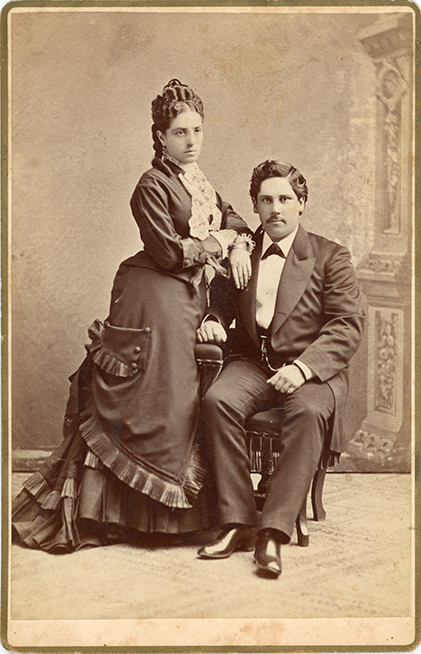
Gumescendo Pacheco
and Rosa Tanforan, ca. 1875
(MHM Collection)
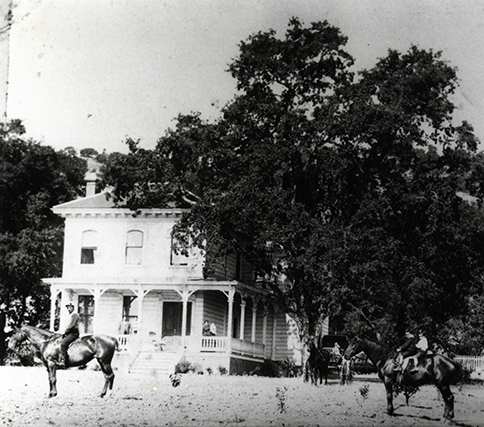
Pacheco family house in Ignacio, 1881
(MHM Collection)
Making a Marin Cab
The hillside of Cabernet vines near the home were planted in the early 1970s. Though Ignacio Pacheco’s generation is credited with planting the first grape vines in Marin, one of which still survives, the vines that supply Pacheco Ranch Winery were planted by Herb Rowland, Sr.
The state had originally taken that chunk of land in order to construct an off ramp for Highway 101, but after they decided to build the off ramp farther south, the Rowlands were able to buy back their land and plant the vineyard.
The hillside of Cabernet vines near the home were planted in the early 1970s. Though Ignacio Pacheco’s generation is credited with planting the first grape vines in Marin, one of which still survives, the vines that supply Pacheco Ranch Winery were planted by Herb Rowland, Sr.
The state had originally taken that chunk of land in order to construct an off ramp for Highway 101, but after they decided to build the off ramp farther south, the Rowlands were able to buy back their land and plant the vineyard.
At the time, Rowland was studying at UC Davis and brought in viticulturists to consult on the vineyard. The experts were able to leverage historical weather data from the Hamilton Field, built on land that was originally part of the rancho, to determine which varietals would grow best.
“This is the perfect mesoclimate for Cabernet,” says Rowland, adding that the bay breeze helps pollinate the grapes and moderate the temperature. “We don't get as stupid hot as Napa, we don't get as stupid cold as Napa and we have the same soil as Napa, so it’s beautiful farming.”’
“This is the perfect mesoclimate for Cabernet,” says Rowland, adding that the bay breeze helps pollinate the grapes and moderate the temperature. “We don't get as stupid hot as Napa, we don't get as stupid cold as Napa and we have the same soil as Napa, so it’s beautiful farming.”’
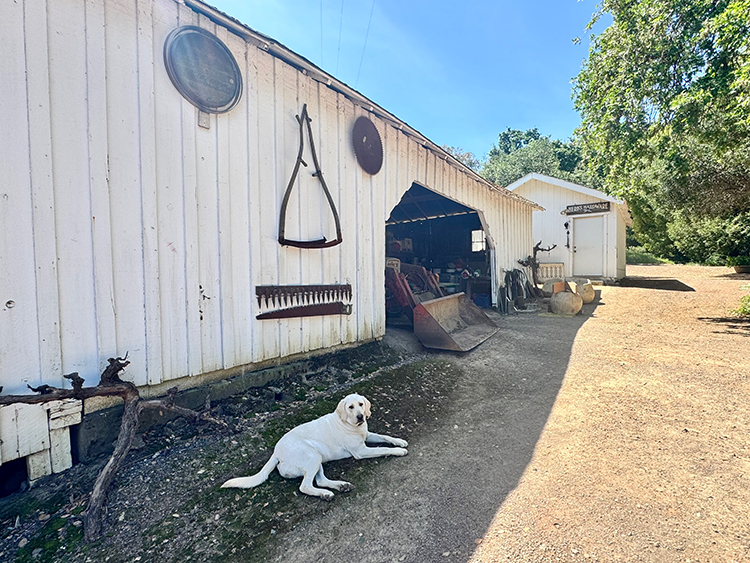
Rowland family dog, Shuka relaxes on the Pacheco Ranch
Photo by author
Rowland marvels at what Marin’s wine production might have looked like had the county’s real estate might not have been so hilly and so valuable in other ways. Production at his Pacheco Ranch Winery is down from its peak but still hit 14 tons last year, with all the grapes sold to other vintners in the region.
And Rowland says the eighth generation of Californios is on tap to take over winemaking at Rancho San Jose: “My son has been farming grapes since he was born.”
And Rowland says the eighth generation of Californios is on tap to take over winemaking at Rancho San Jose: “My son has been farming grapes since he was born.”
(Originally appeared in the Marin Independent Journal)